
Kettlebells are a versatile and efficient workout tool that can transform your strength routine. Unlike isolated machines, a kettlebell engages multiple muscle groups at once, giving you a balanced workout that builds functional strength and endurance. For example, a single kettlebell swing not only targets the hips and glutes but also recruits your core and shoulders in a rhythmic, cardiovascular movement. Whether you’re a beginner or a seasoned athlete, incorporating kettlebell moves can make your workouts more dynamic and effective.
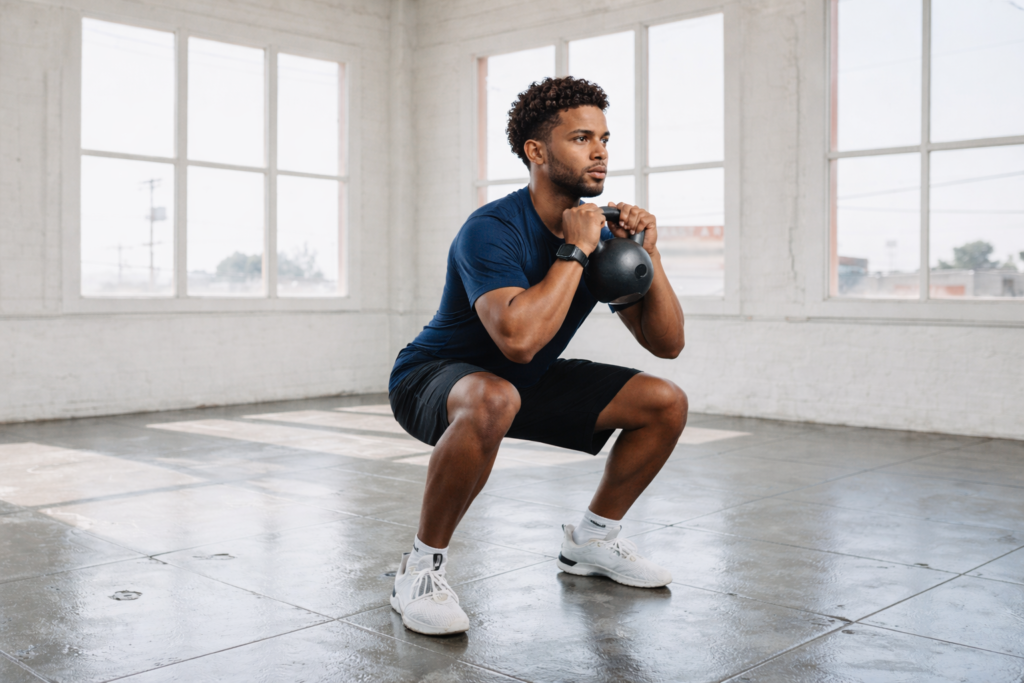
Kettlebell training also offers a unique blend of strength, cardio, and flexibility work. Many exercises, like the Turkish get-up or kettlebell swing, flow continuously and demand stability from the entire body. This holistic effect means you’re not only building muscle but also improving balance and coordination. According to fitness experts, kettlebell workouts improve overall muscle tone and cardiovascular health by combining ballistic (fast, explosive) movements with controlled lifts.
Benefits of Kettlebell Training for Core, Back, and Chest
Kettlebell exercises are excellent for building core strength. By challenging your balance and posture, they force your abdominal and back muscles to work hard in every move. For instance, holding a kettlebell overhead or performing a single-arm squat creates an uneven load that your midsection must stabilize. In fact, one expert notes that “kettlebells are one of the most effective tools for core training because they challenge your core from all angles,” keeping the abs and obliques engaged throughout each rep. This means even simple kettlebell moves turn into intense core workouts.
Training with kettlebells can also supercharge your back and chest development. For the back, exercises like rows, deadlifts, and swings make your lats, traps, and spinal stabilizers work harder. Kettlebell workouts encourage strength and muscle growth (hypertrophy) in the upper body. For example, a strength coach explains that kettlebells improve power output and encourage hypertrophy in the back when used in movements like rows and deadlifts. Meanwhile, when targeting the chest, kettlebells can mimic bench press and fly movements. Research-backed coaches note that kettlebell presses “produce similar results” to traditional barbell or dumbbell presses, helping you build the pectoral muscles effectively.
Another key benefit is versatility. A single kettlebell can train your upper body and lower body, making it ideal for home gyms or travel. Many trainers note that kettlebells have a lower injury risk compared to some other free weights, provided you use good form. Beginners are encouraged to start with basic drills and proper guidance; once you master the basics, kettlebells allow for progressive overload (increasing weight or reps) in a controlled way. Overall, this equipment-based flexibility and the broad muscle engagement make kettlebells a powerful tool for core, back, and chest development.
Kettlebell Core Exercises
Strengthening your core (abs and obliques) is one of the biggest advantages of kettlebell training. Core muscles engage in nearly every kettlebell move, even those that appear to target the legs or arms. For example, the Turkish Get-Up forces you to move from lying to standing while holding a weight overhead, demanding full-body stability – your core must brace through twists and transitions. Similarly, Plank Pull-Throughs (in high plank, dragging a kettlebell side to side) require anti-rotational strength from your midsection. As one expert summary notes, moves like overhead presses, swings, and twists mean “your core is constantly working to keep you stable” during kettlebell workouts.
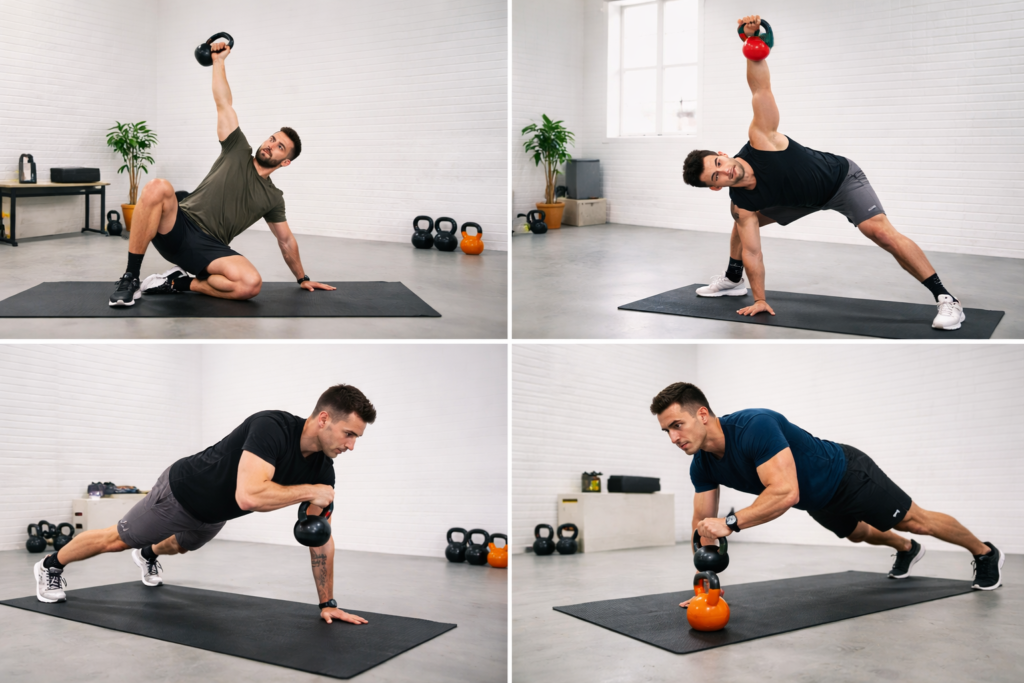
Here are some top core-focused kettlebell exercises:
- Kettlebell Windmill: Stand with a kettlebell locked overhead in one hand. Hinge at the hips and reach the opposite hand down your leg. This lateral bending works the obliques and lower back.
- Turkish Get-Up: From lying on your back, stand up while keeping the kettlebell raised overhead, then reverse the move. This complex lift targets abs, obliques, hips, and shoulders.
- Plank Pull-Through: In a high plank with hands under shoulders, drag a kettlebell from one side to the other with one hand while keeping hips square. This anti-rotation move fires up the entire core.
- Kettlebell Sit-Up: Lie down and perform a sit-up while holding the kettlebell on your chest or overhead, increasing resistance for your rectus abdominis. (Keep your lower back pressed into the floor on the way down.)
- Renegade Row: In plank position with a kettlebell under each hand, row one kettlebell to your hip, alternating sides. This plank variation demands extra stability from the abs and obliques.
Each of these moves highlights a different part of your core. The unbalanced nature of a kettlebell load forces even stabilizer muscles to activate. In practical terms, consistent kettlebell work will strengthen your whole midsection more effectively than isolated crunches. Just remember to start with a light weight to focus on control, and gradually increase weight as form improves.
Kettlebell Back Exercises
Building a strong back with kettlebells is entirely doable. Kettlebells can be loaded for rowing motions, deadlifts, and carries, all of which recruit the major back muscles: the lats, traps, rhomboids, erectors, and even biceps. In fact, kettlebell training offers a variety of back exercises where the back is working to stabilize the upper body or as a prime mover in a rowing motion. This versatility means you can target thickness (rhomboids and traps) and width (lats) with just one tool.
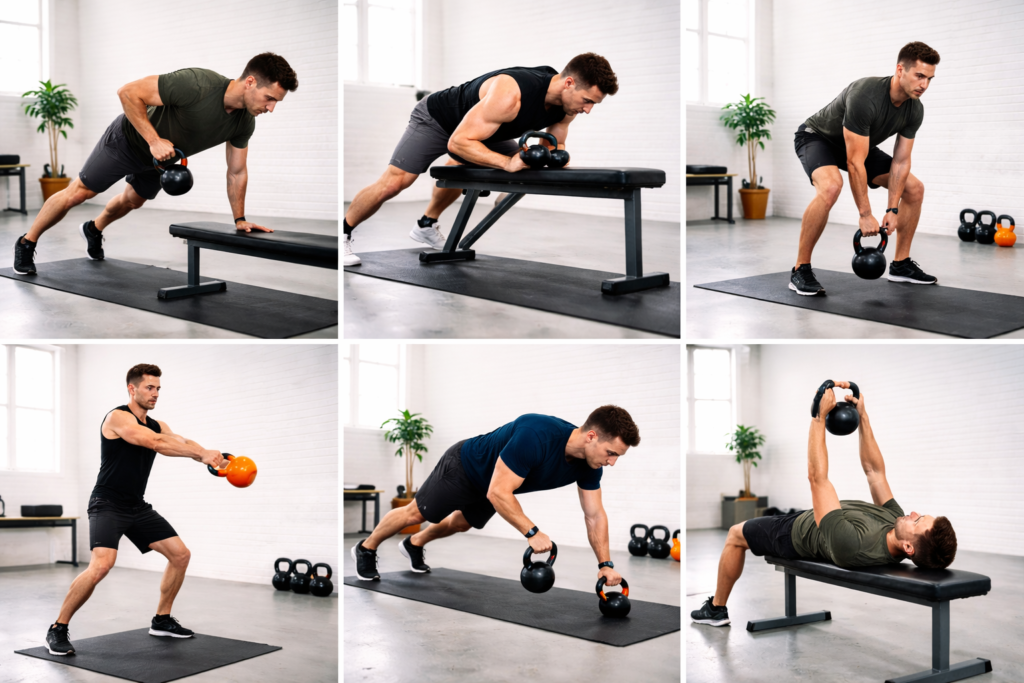
Top kettlebell exercises for back strength include:
- Single-Arm Kettlebell Row: From a bent-over position (torso parallel to floor), row one kettlebell to your side. This isolates one side of the lats and upper back.
- Chest-Supported Kettlebell Row: Lie face down on a bench and row kettlebells upwards. Supporting the chest isolates the back muscles and minimizes momentum.
- Kettlebell Deadlift: Stand over the kettlebell, hinge at the hips, and lift it with both hands. This fundamental move works the entire posterior chain: lower back, glutes, and hamstrings. It’s one of the best ways to load your back muscles with heavy weight safely.
- Kettlebell Swing: The swing is often viewed as a hip exercise, but it also engages the upper back and lats to control the pull of the weight. It teaches explosive hip drive that can transfer to heavier back work.
- Renegade Row (Back Variation): In a high plank with two kettlebells, perform alternating rows. This works the upper back and core simultaneously.
- Kettlebell Pullover: Lying on your back (on a bench or floor), hold a kettlebell above your chest and lower it back overhead. This targets the lats and also stretches the chest and shoulders.
Training the back with kettlebells has multiple benefits. It improves posture and functional strength. As one trainer notes, kettlebells are ideal for power and hypertrophy in back training. Unlike dumbbells, a kettlebell’s shape allows easier swings and explosive lifts, making back workouts both powerful and varied. Moreover, kettlebell back exercises can be safer for many lifters. The handles and design often feel more natural; for example, deadlifting a kettlebell keeps it close to the body and encourages a neutral spine, reducing strain. Over time, regular kettlebell back workouts can lead to stronger spinal stabilizers and better injury resilience.
Kettlebell Chest Exercises
Kettlebells aren’t just for legs and core — they can also effectively build the chest and shoulders. Because you can press and fly a kettlebell much like a dumbbell or barbell, you can replicate many upper-body moves. Experts point out that kettlebells can mimic the standard pressing exercises and produce similar results to barbell or dumbbell presses. In fact, kettlebell presses often feel harder because the weight can shift slightly, demanding more stability from the chest and shoulder muscles.
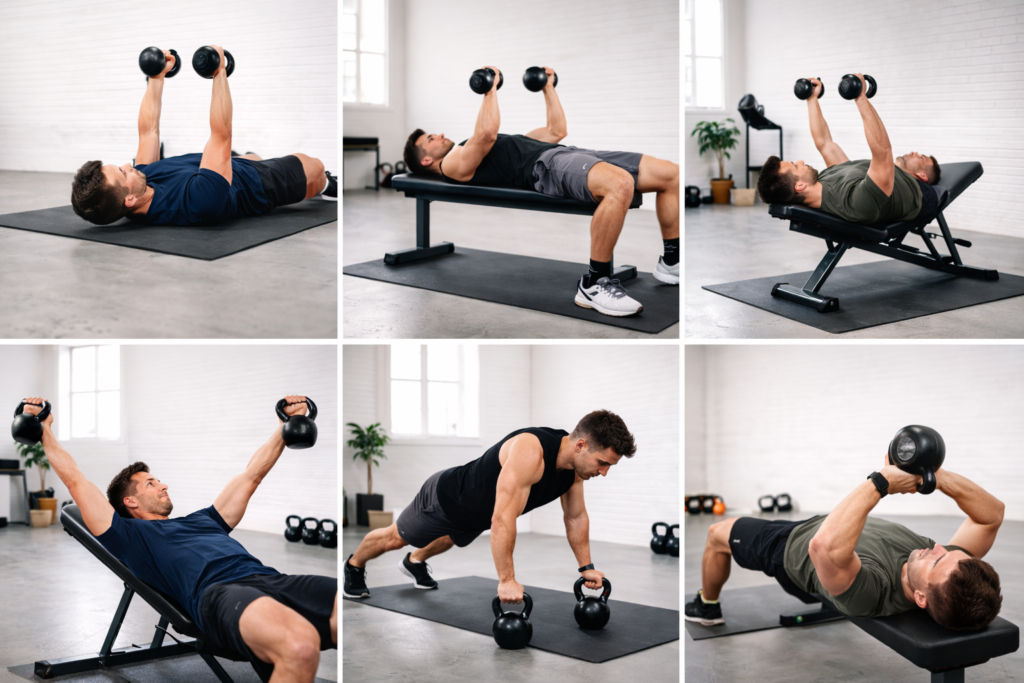
Consider these kettlebell chest exercises:
- Kettlebell Floor Press: Lying on the floor, press two kettlebells (one in each hand) straight up from your chest. This is similar to a dumbbell floor press and targets the pectorals and triceps. It’s beginner-friendly and good for pressing strength.
- Kettlebell Bench Press: If you have a bench, perform a standard flat or incline bench press with kettlebells instead of dumbbells. The extra need to stabilize each kettlebell challenges more of the shoulder and chest muscles. You can do single-arm or double-arm variations.
- Incline Kettlebell Press: Lying on an incline bench, press the kettlebells to hit the upper chest and front shoulders.
- Kettlebell Chest Flyes: Lie on a bench or stability ball, hold kettlebells above your chest with palms facing inward, and open your arms wide (keeping a slight bend) before pressing back together. This stretches and works the pectorals.
- Deficit Push-Up on Kettlebells: Place two kettlebells on the floor and grip their handles to perform push-ups. This increases range of motion and requires more shoulder stability.
Notably, while many full-body kettlebell moves (like the swing) build overall strength, they are not optimal for isolating the chest. Traditional presses are just a bit more effective for chest strength and size. However, using kettlebells adds novelty and can improve grip and stabilization. For example, a kettlebell pullover (lying on your back and moving a kettlebell from above your chest backward) will engage both your chest and lat muscles, making it a hybrid exercise. Overall, the key is to treat kettlebells as you would dumbbells for chest training, but enjoy the added stability challenge and full-body engagement they bring.
Choosing Kettlebell Equipment & Safety Tips
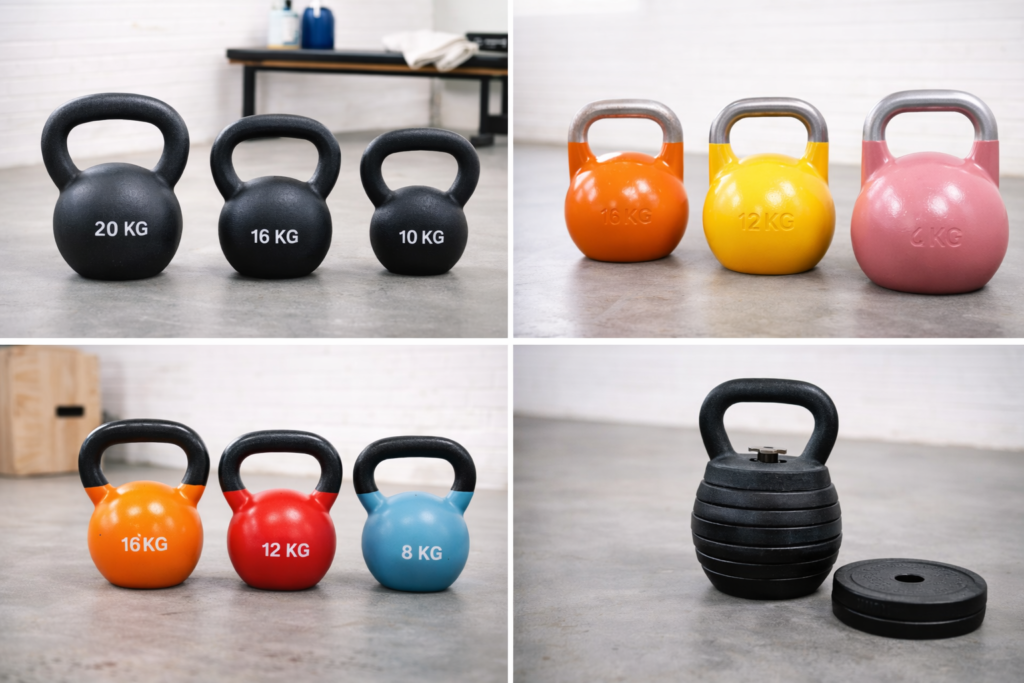
When preparing for kettlebell workouts, the right equipment and safety measures are important. The most basic gear is, of course, the kettlebell itself. Kettlebells come in several styles:
- Cast Iron Kettlebells: These are traditional kettlebells, usually with flat bases so they sit stable on the floor. They come in fixed weights (often stamped on the bell).
- Competition Kettlebells: These have a consistent size and shape regardless of weight, which can feel more predictable for technical lifts like snatches and cleans. If you’re into kettlebell sport, competition bells are ideal.
- Coated Kettlebells: Some have vinyl or rubber coatings for floor protection and a different feel. If you do lots of cleans (where the bell rolls on your forearm), test how the coating feels on skin.
- Adjustable Kettlebells: These let you change plates to vary weight. They save space but might be slower to use in circuits. For beginners unsure of weight needs, an adjustable can be a smart start.
No matter the type, make sure the handle is comfortable and not too rough, and that the bell sits flat when you set it down. A good grip is crucial. If possible, try the handle before buying or choose a reputable brand.
Next, consider your setup:
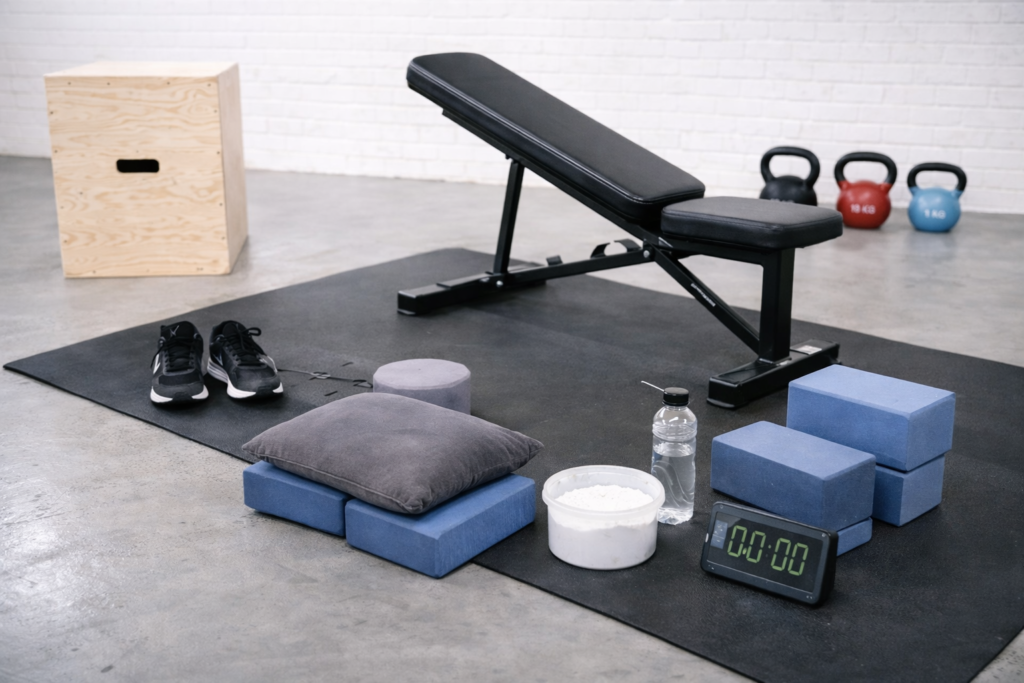
- Workout Surface: Use non-slip flooring or a thick mat. Kettlebell moves like swings and deadlifts can be hard on bare floor and joints if the bell drops.
- Bench or Box: Useful for exercises like chest flyes, benches supported rows, or triceps dips.
- Supportive Gear: Many lifters use chalk or gloves to improve grip. If you sweat a lot, chalk can prevent the bell from slipping. Also, proper shoes (flat, stable soles) help maintain balance.
- Other Accessories: You might want a timer for circuits or a mirror to check form. Some also use yoga blocks or pillows for Turkish get-up foot support.
Safety and technique are paramount. Before adding heavy weight, always learn the basic kettlebell swing and squat technique (often with an empty kettlebell or even a water bottle to practice hip hinge). The advice from professionals is to master the basics first, because despite the swinging motions, kettlebells generally have a lower injury risk if used correctly. In fact, trainers often recommend cementing your kettlebell form before moving on to heavier dumbbells or barbells.
As a guideline for weight: beginners often start around 8–12 kg (18–26 lbs) for women and 12–16 kg (26–35 lbs) for men, adjusting to comfort and strength. For core exercises, one source suggests starting with 6–10 kg for most people and focusing on controlled movements rather than heavy loads. Always prioritize control and range of motion. If something feels off (sharp pain or wobble), stop and reassess your form or weight.
Man holding kettlebell photo – Free Man Image on Unsplash
An individual holding a kettlebell in a gym, demonstrating grip and posture needed for many exercises.
Kettlebell training is highly effective, but it’s important to listen to your body. Incorporate rest days, and don’t rush through reps just to use momentum. Each kettlebell rep should feel deliberate. Over time, as your strength improves, you can add more challenging exercises or combine multiple kettlebell moves into circuits for extra intensity.
FAQs
Are kettlebells good for core workouts?
Absolutely. In fact, kettlebells are among the most effective tools for core training. Because the weight is offset, exercises like presses, swings, and twists force your abs, obliques, and stabilizers to work continuously to keep you balanced. This means almost any kettlebell exercise becomes a core exercise. Over time, consistent kettlebell training can strengthen your midsection and improve stability for daily activities.
What kettlebell weight should I use for abs and core?
It’s best to start lighter than you might think. For many core moves, 6–10 kg is a good starting range. Beginners might consider even lighter, especially on dynamic moves. The goal is to maintain control: using a weight that allows you to keep proper form. As you get stronger and more confident, you can gradually increase the load. Remember, strong and stable movements are more important than heavy weight when working your core.
Can kettlebell exercises build muscle in my back and chest?
Yes. Kettlebells can effectively train the major muscle groups in your back and chest. Pressing and flye-type moves target the chest muscles much like dumbbells do, and rowing and hinge movements target the back. Kettlebells can mimic standard presses and produce similar strength gains. Pairing kettlebell workouts with good nutrition and consistency can help you add muscle and definition in these areas.
What other equipment do I need for kettlebell workouts?
The main requirement is one or more kettlebells of suitable weight. Beyond that, a flat bench or stability ball can open up chest and upper-body exercises (bench press, flyes). A mat or padding is useful for floor exercises (sit-ups, Turkish get-ups). Some people use lifting straps or gloves, but they’re optional. The most important “equipment” is good form and space to move safely.
How often should I train with kettlebells?
Aim for 2–4 kettlebell sessions per week, allowing at least a day of rest between intense workouts. This gives your muscles time to recover. You can start with short kettlebell workouts (20–30 minutes) focusing on full-body moves, or mix in specific core/back/chest days. Consistency is key – even 15 minutes of kettlebell work a few times a week can yield benefits in strength and endurance.
Are kettlebell workouts suitable for beginners?
Yes! Kettlebells can be scaled to any fitness level. Beginners should start with fundamental moves (like the deadlift or goblet squat) using light weight. It’s often recommended to learn proper hip hinge and squat form without weight first. Over time, you can add single-arm and overhead moves. Kettlebells actually allow beginners to safely practice complex movements (e.g. swings, get-ups) with manageable weight, building confidence and core control.
What makes kettlebell training different from dumbbells or machines?
Kettlebells uniquely combine momentum, unilateral loading, and full-body activation. For example, a kettlebell swing is a ballistic exercise that isn’t replicated by dumbbells or machines. The off-center handle of a kettlebell forces stabilizing muscles to fire. You can transition smoothly between exercises (like from a clean into a press) without setting weights down. This functional, dynamic approach sets kettlebells apart and can improve overall athleticism and conditioning.
How do I ensure I train safely and effectively with kettlebells?
Always focus on technique. Keep a neutral spine, hinge at the hips (not bending at the waist), and engage your core. Start with lighter weight to learn the movement patterns. It may help to work with a certified instructor or use reputable instructional videos for guidance. Remember to warm up, start slowly, and stop if you feel any pain. With safe practice, kettlebell training is very effective and generally carries a lower injury risk than lifting improperly on barbells or using machines.
Leave a Reply